League Trophy Shop · buyer guide
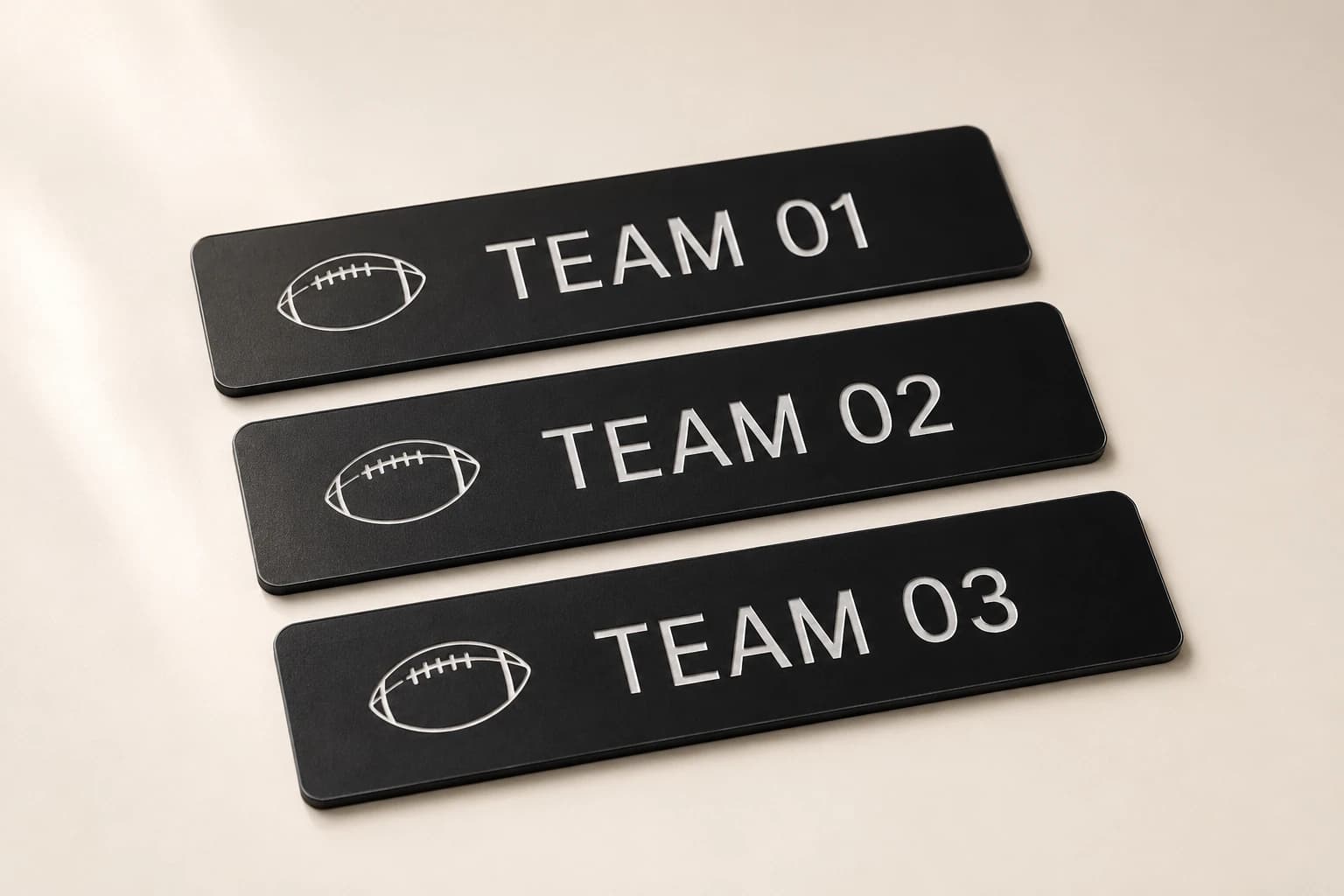
Draft-board nameplates: fixed labels or movable team markers
For a worldwide League Trophy Shop draft-board nameplate order, choose fixed labels for a defined one-event layout and movable markers when the approved board system needs team identities repositioned or reused. Confirm the actual board surface and retention method first. Reusable nameplates do not automatically make the board, player labels or complete draft kit reusable.
Reviewed 2026-09-05 · AI-assisted editorial review. General buying guidance; illustrative scenarios are not customer case studies. Images are AI-generated concepts.
What does the nameplate identify during the draft?
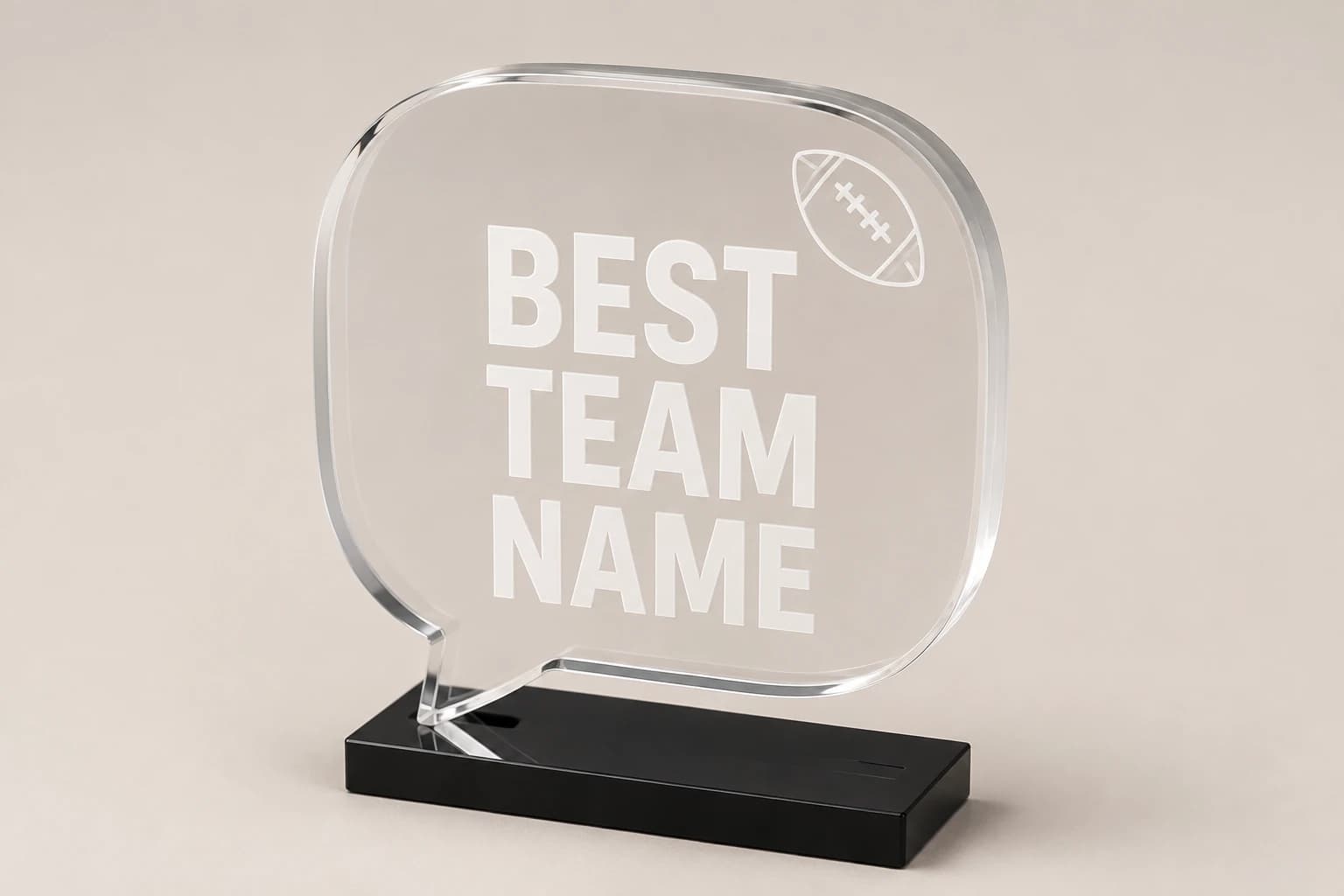
Define whether the marker names a fantasy team, a manager or a fixed draft position. Those labels serve different purposes and can change independently. A team marker should remain connected to the approved team identity even when its position changes, while a column number should describe the board location rather than pretend to be another team.
Keep team-name markers separate from player-selection labels. The former identify who owns a column or area; the latter record picks under the league’s chosen format. A durable team plate does not replace the information system for player selections. The commissioner should describe this distinction in the product brief before choosing marker size or mounting style.
Is the underlying draft board intended to be reused?
Check the construction and stated use of the actual board before designing permanent or reusable nameplate attachments around it. A paper board, rigid panel and retained frame can need different approaches. Ask whether the board itself is intended for another season instead of assuming that removable-looking team markers establish the life of the complete kit.
The league may reasonably choose a one-event board and keep the team markers as separate objects, but it should make that decision openly. Do not attach a durable-looking plate to a disposable surface and then describe the whole assembly as reusable. Record which components are retained, replaced or archived after the draft so next season’s order starts from actual inventory.
FantasyJocks states that its paper draft boards are not intended for reuse.
Which retention method matches the actual surface?
Ask the maker to confirm a compatible retention method for the board surface, marker material and intended movement. A magnet, slot, clip or adhesive arrangement each needs its own complete specification. Do not infer compatibility from the word metal or from the way a marker appears attached in a promotional photograph.
If the league already owns a board, supply the requested surface and thickness information or an appropriate sample. The commissioner can test the proposed retention through the agreed use without making a universal performance claim. A marker that stays in place at setup still needs review for the repeated repositioning or transport the league actually expects.
How should marker width relate to the board columns?
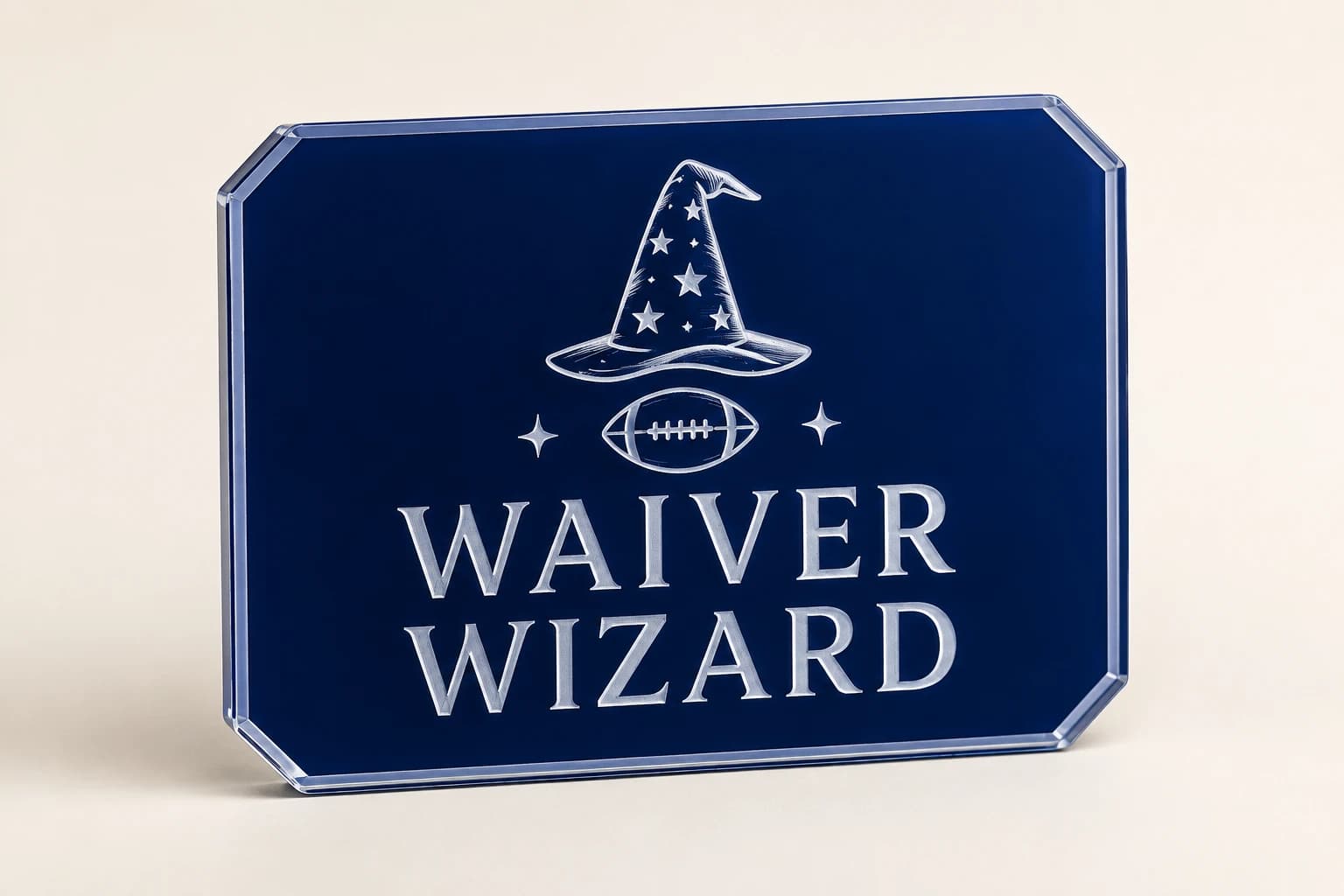
Compare the assembled marker width with the usable heading area of the actual board column. Leave the board’s dividing lines and nearby labels readable according to the approved layout. A team name that fits on the marker can still overlap another column if the complete holder or attachment extends beyond the intended heading area.
Use the longest approved team name in a representative proof. If one name is unusually long, compare line breaks or an approved shorter display form without silently changing the team identity. Keep the physical marker dimensions separate from the text budget. A character count cannot establish column fit or the clearance needed to move a plate between neighboring headings.
Should draft positions move with team names?
Keep position labels separate when the league’s board layout requires the positions to remain fixed while team identities move. If both are intended to travel together, approve that relationship explicitly. The nameplate supplier should implement the league’s chosen board structure rather than infer the draft format from a list of team names.
Consider what the commissioner needs to change when the order is finalized or a draft slot is traded under league rules. Moving the identity marker may be enough in one layout, while another needs different position labels. The physical design should make the authorized change clear without requiring staff to peel off unrelated player labels or rewrite the entire board.

Use the article’s example files
The worksheet contains fictional selection scenarios and unresolved specification fields. Replace them with the actual product proposal; sample dimensions and quantities are not catalog specifications or production approval.
How do permanent labels compare with removable markers after the event?
A permanent label can remain part of an archived one-event board, while a removable marker can be retained for another approved use. Choose the intended end state before treating removability as an automatic advantage. A league that displays its completed draft board may prefer to preserve the original identities and arrangement together.
If the markers will be removed, identify where they will be stored and how the set will remain complete. Keep current team identities distinguishable from retired names. A reusable blank or replaceable face can support a new member only when that capability belongs to the confirmed construction. Do not promise that every engraved nameplate can be updated for the next manager.
What should be tested before ordering all markers?
Test the proposed marker on the actual board format with the intended heading text and retention method. Review placement, removal where required, neighboring-column clearance and readability from the draft’s ordinary viewing position. A front-facing artwork approval does not establish that a complete set can be moved or read without interfering with the board grid.
Use the test to identify a specific decision, such as whether a long name needs another layout or whether the retained board accepts the proposed clip. Keep any unresolved questions in the brief. If the test uses another board material, do not treat it as confirmation for the league’s existing board simply because the grid dimensions are similar.
What belongs in a complete draft-nameplate quote?
Ask League Trophy Shop to identify marker bodies, personalized faces, retention components, any holders, assembly, packaging and delivery. State whether the board and player labels are included or retained separately. A set of named plates should not be described as a complete draft kit unless the actual quoted scope supplies the other required elements.
Price the selected configuration with the actual number of personalized and blank markers. Keep a blank contingency piece distinct from a named team plate because it may need another agreed personalization step before use. If the league requests a complete board as well, compare that scope separately instead of assuming it comes with the custom-nameplate order.
How should the marker set be checked before draft day?
Match the completed team markers to the approved heading list and inspect the included retention components before setting up the board. Check the longest names in their actual positions and identify any blank reserves. The receiving check should confirm a complete usable set rather than only count objects in a carton.
Record the board and marker configuration that the league accepts, including which parts remain after the event. If next season uses another grid, reassess marker width and retention compatibility before reusing the set. Give League Trophy Shop the actual board relationship and approved team strings so the product request solves the physical display job rather than merely reproducing a list of names.
Illustrative example: how do fourteen markers serve a twelve-column draft board?
A fictional league has a twelve-column board and orders twelve personalized team markers plus two explicitly blank contingency markers. The physical order contains fourteen markers, but the draft still has twelve approved team columns. The blank pieces do not add teams, widen the board or establish that any existing name can be changed.
The arithmetic is twelve named markers plus two blanks equals fourteen. The worksheet keeps board columns, approved team names and reserve markers in separate fields. All proposed dimensions and the retention method remain pending review against the actual board. No assumed marker width is presented as a standard size for every twelve-team layout.
If the league changes to a different board format next year, it checks the marker-to-column fit and attachment again before reusing the set. A correct count from this year cannot establish that physical compatibility. If only one team name changes, the league requests the confirmed replacement or new-marker process rather than treating one of the blank reserves as already personalized.
Optional calculation: Optional count of team and reserve markers
Which draft-board marker arrangement matches the league’s use?
Compare fixed labels, movable personalized markers and holders with replaceable faces by how team identity changes and what the league retains after the draft. The board itself remains a separate specification. Confirm the complete surface and retention relationship before choosing a reusable component that may not suit the actual draft setup.
| Option | Useful when | Specification to confirm |
|---|---|---|
| Fixed one-event label | The completed board remains a record of that draft | Approved surface and permanent placement scope |
| Movable personalized marker | Team identities need repositioning or later reuse | Actual retention, column fit and storage |
| Holder with replaceable face | The heading content changes within a retained system | Compatible face, access method and board relationship |
What should buyers confirm before ordering?
Custom draft-board nameplates solve the physical team-heading problem, not every part of a draft kit. These answers address price, reuse, board compatibility and spare markers. Give League Trophy Shop the approved team strings and actual board information so the proposed pieces fit the league’s display method without assuming a draft rule or missing component.
What should the price of custom draft-board nameplates include?
Ask League Trophy Shop to identify the personalized markers, blanks, retention components, holders if used, assembly, packing and delivery. State separately whether the board and player-selection labels are supplied. A nameplate set is not automatically a complete draft kit, so compare written offers using the same finished scope and retained components.
Do reusable team markers make a paper draft board reusable?
Not automatically. Check the intended use and construction of the actual board. The league can retain markers while replacing or archiving the board, but those are separate decisions. Record which parts survive the event rather than treating a durable-looking nameplate as evidence that the entire draft system supports another season.
Will magnetic markers work on any metal-looking board?
Confirm the actual board surface and complete marker-retention proposal rather than inferring compatibility from its appearance or material label. Ask for the information the maker needs and test the agreed arrangement on the relevant board. The buyer should not assume that a promotional image establishes attachment performance for another surface.
Do two blank reserve markers add two league teams?
No. They are physical contingency pieces, while the league’s approved teams and board columns remain separate counts. A blank marker may also need an agreed personalization step before use. Keep its role visible so an order total does not accidentally change the draft format or suggest that the board has more columns.
Can last year’s markers be used on a new draft board?
Review their actual width, complete attachment and heading layout against the new board before reuse. A correct old name list or marker count does not establish physical fit. If a team identity changes, use the confirmed update or replacement process and retain the accepted configuration for the league’s next purchase.
Sources and scope
The sources below support the cited technical details. The ordering workflows are editorial recommendations. Your project specification, price and schedule are established in the written quote and approved proof.
- FantasyJocks: Frequently Asked Questions · checked 2026-09-05
Which buying guide should you read next?
All buying guidesDecide who keeps the trophy, how winners are added and how many future seasons the base should accommodate. Separate the permanent league identity from the changing winner records. Compare the complete update and shipping process before choosing a large perpetual design.
Preserve a league joke’s meaning and the recipient’s comfort while checking exact text, readable hierarchy and the approved season context.